Power Protection for Wireless Devices | Lightning & Surge Protection Solutions
Protect wireless and network equipment from lightning-induced surges with coaxial and Ethernet surge protectors. Designed for outdoor antennas, radios, PoE devices, and critical infrastructure.
main content
Nearby lightning strikes generate short-duration, high-current pulses often reaching thousands of amperes. These impulses contain both low and high-frequency components, including VHF and UHF energy that can be picked up by outdoor communication antennas.
When this energy couples into antenna systems and cabling, it can induce extremely high voltages and currents capable of damaging or destroying connected wireless devices. Lightning surge protection devices (LSPDs) are therefore required to safely shunt this energy to ground without allowing it to pass through sensitive equipment.
text images content
For coaxial cables, the strike creates a potential difference between the center conductor and the cable shielding of the coaxial cable. This then forces a high voltage differential and damaging current flow through the equipment. A lightning surge protector is therefore needed to shunt this very high current to the ground without transferring it to the connected devices. Designed for high-frequency, analog signals carried by coaxial cables.
Coaxial lightning surge protectors are designed to:
- Safely divert surge energy to ground
- Protect high-frequency analog RF signals
- Preserve signal integrity during normal operation
These protectors are engineered specifically for RF applications and are commonly used with outdoor antennas, cellular radios, microwave links, and PTP systems.
Below is an example of surge protector
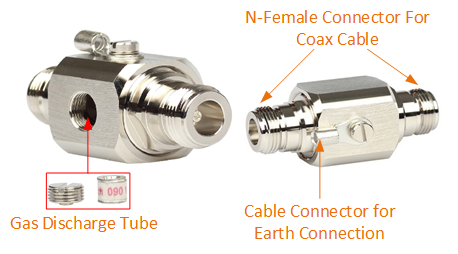
Connecting LSPD to Coaxial
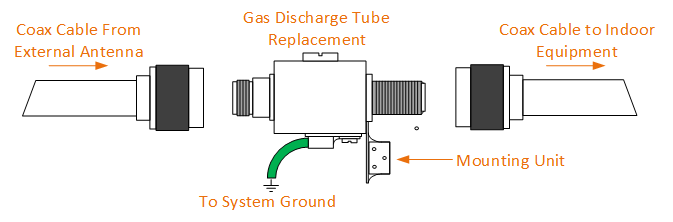
Proper grounding and correct installation are critical to ensure effective surge diversion and equipment protection.
Below is an illustration of installation
text images content
The ethernet surge protectors designed for communication devices using ethernet technology like outdoor wireless access points, IP cameras and PTP links. Optimized for digital signals used in ethernet networks. They limit voltage surges and spikes from damaging network devices by either blocking or redirecting excess voltage back to the ground, ensuring that only the standard voltage levels reach the connected devices. Ethernet surge protectors often include features to protect against surges coming through data lines as well as power over Ethernet (PoE) lines.
These protectors are optimized for digital Ethernet signals and:
- Limit voltage surges and spikes on data lines
- Protect Power over Ethernet (PoE) circuits
- Redirect excess energy safely to ground
Ethernet surge protectors help ensure that only standard operating voltages reach connected devices, preventing damage from transient surges entering through network cabling.
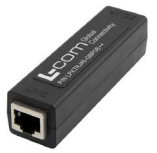
Below is an image for an ethernet surge protector.
text images content
It is important to note that lightning surge protectors are not designed to withstand direct lightning strikes. They are intended to mitigate the effects of nearby strikes. In the event of a direct strike, the protection device itself will likely be permanently damaged as it sacrifices itself to protect downstream equipment.
Proper grounding, bonding, and system design remain essential components of a comprehensive lightning protection strategy.
Quick Actions
Explore additional technical articles and best practices on protecting network and wireless devices from electrical surges and lightning events.