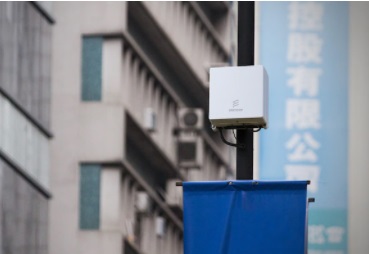
Small Cells for Indoor & Outdoor Cellular Coverage | CBRS, 5G & LTE Small Cells
Learn how small cells enable scalable LTE, 5G, and CBRS coverage for malls, stadiums, campuses, and urban environments. Explore backhaul, power, and deployment options.
Small Cells for Modern Cellular Networks
Low-power cellular base stations designed to deliver high-capacity, localized LTE, 5G, and CBRS coverage indoors and outdoors.
- Cell Types: emto, Pico, Micro Small Cells
- Technologies: LTE, 5G NR, CBRS, mmWave
- Deployments: Malls, Campuses, Stadiums, Smart Cities
main content
Small cells are low-power cellular radio access nodes that operate in licensed and unlicensed spectrum and provide localized coverage over a smaller area than traditional macrocells.
They are widely used to improve capacity, coverage, and spectral efficiency in dense urban, indoor, and enterprise environments.
Small cells should not be confused with customer premise equipment (CPE) such as LTE or 5G routers, which provide internet access but do not function as cellular base stations.
text images content
Small cells play a key role in CBRS private LTE and private 5G networks, where CBRS Devices (CBSDs) are deployed and managed through a Spectrum Access System (SAS). Indoor small cells are commonly used in enterprise CBRS architectures to deliver secure, predictable wireless connectivity.
See the example below for small-cell CBRS Devices (class A CBSDs) used in SAS/CBRS private LTE network deployments.
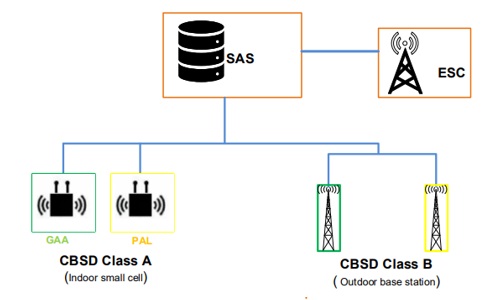
Indoor small cells for CBRS network architecture. Learn More about CBRS
text images content
To simplify and accelerate deployments, small cells can utilize wireless backhaul technologies, including:
- Point-to-Point (PtP) Microwave Links – High-capacity wireless backhaul for connecting small cells to the core network
- Integrated Access and Backhaul (IAB) – 3GPP-defined architecture allowing small cells to use the same radio resources for access and backhaul
These approaches reduce the need for fiber and enable rapid network expansion.
Example of microwave small cell backhaul. Learn more about PtP Link.
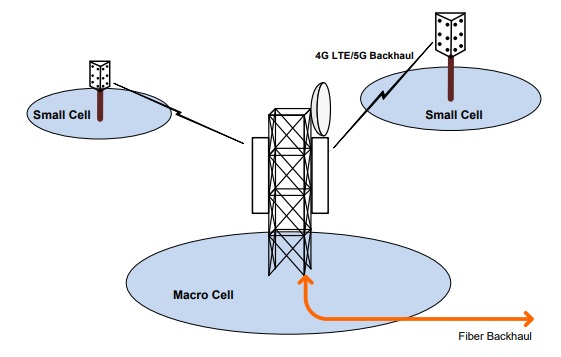
Example of IAB small cell backhaul
Small cells are particularly important for 5G coverage at millimeter-wave (mmWave) frequencies because of the shorter range of mmWave that requires much denser cells to cover the same area. The solution also allows the re-use of frequencies.
text images content
Small cells and other wireless backhaul equipment can be powered directly from streetlights or other outdoor luminaires that include photocell control. Power taps are required to tap power from the streetlight without interfering with photocell operation:
- Streetlight and Luminaire Power – Using photocell-compatible power tap adapters
- Building Power – With battery backup and charging systems
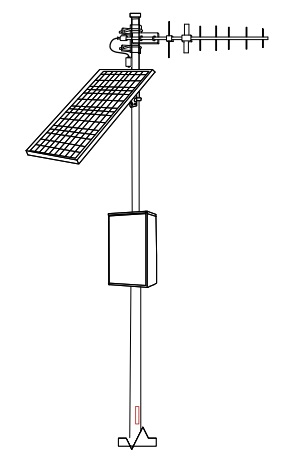
- Off-Grid Power – Solar modules combined with outdoor UPS solutions
Power taps allow safe power extraction from streetlights without interfering with photocell operation.https://www.rfwel.com/us/index.php/long-range-links
Example streetlight mounted small cells powered via photocell power tap adapters. Learn more.https://www.rfwel.com/us/index.php/long-range-links
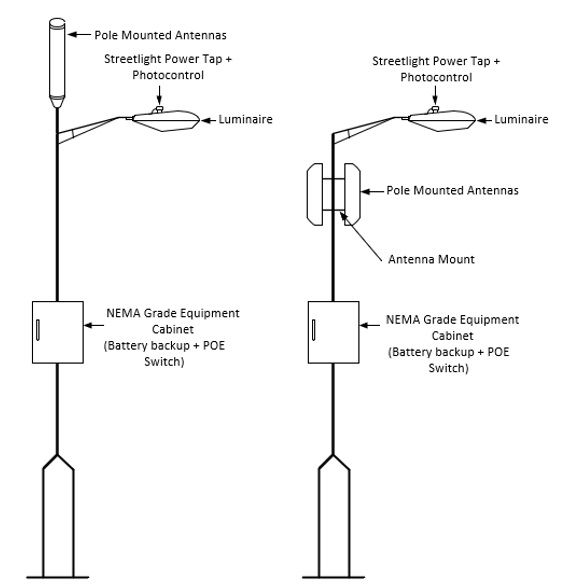
Example 3-pin photocell power tap adapter to power small cell and backhaul radio. Learn more.
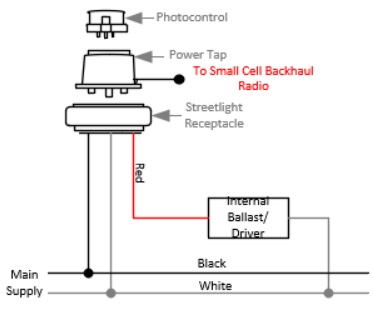
For backup power, off-grid solar modules and outdoor uninterruptible power suppliers (outdoor UPS) can be used.https://shop.rfwel.com/power-tap/?AdditionalFeatures=3-Pin__(No__Control__Pass-Through)&
text images content
Small cell networks can be deployed on top or on the side of buildings. They can use power from buildings with battery back-up and charging system and with appropriate mounts.
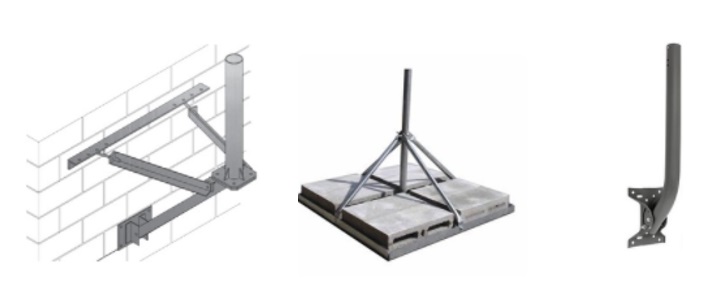
Indoor small cells can be mounted on a ceiling, wall, or placed on a desktop (like Verizon's network extender) to create indoor or stadium cellular coverage. This is ideal in areas where indoor signal penetration is poor.
text images content
- Femtocells: a small, low-power cellular base station, typically designed for use in a home or small business
- Picocells: A picocell is a small cellular base station (BS) that is an alternative to a repeater or distributed antenna system. Spans about (98 to 328 feet) 30 to 100 meter
- Microcells: A microcell is a cell in a mobile phone network served by a low-power cellular base station (tower). Covers a limited area such as a mall, a hotel, or a transportation hub. The FCC has recently provided a framework relevant to small wireless facilities deployment more. Please contact an RFWEL indoor-coverage specialist for design, infrastructure selection, and installation of small cell networks.
Example of Ericsson Micro 4408 Small Cell